Las Estrellas y Mi Corazon
This is Part 48 of a serial blog originally titled 'Martha Carter's Healing Journey'. Curious about the earlier posts? To start from the beginning, read Part 1.
***
Open Our Hearts To The Stars

Stargazing issues
I love being in Mexico for many reasons. I have been coming to the same beautiful, small beach town for over 15 years and its incredible natural beauty never gets old. Nature is very powerful here with the constant heat, ocean, wind, and smell of salty damp air. The presence of birds, fish, turtles, lizards, iguanas, spiders, and hermit crabs buzz all around. The rhythmic pounding of the waves reminds me of a heartbeat propelled by endless deep inhales and exhales.
Last night, I walked out of the casa towards the ocean and noticed that the stars were brighter than usual. I took a deep breath of the fragrant ocean and, as I started to look straight up at the sky, all I could think about was how awkward it felt to try to arch my stiff back, and how much I hate my fusion. Haha. It kind of broke the magic of the moment. Sigh. But the stars demanded my attention so I walked over to a post where I could support myself by leaning backwards, allowing me to look up with a bit more ease. But it still wasn’t very comfortable.
the Negative Impacts of a Fused and Compressed Torso
Of course this got me thinking - as I often do - about how having scoliosis and spinal fusion impacts life in myriad ways. I have written about this many times, but for quick reference, see the list below. From now on, I want to add ‘difficulty stargazing’ as an official impact point.
Impacts of scoliosis:
reduced mobility
back, hip, shoulder, neck pain plus chronic muscle aches and tension
noticeable changes in posture and appearance - an uneven waist
breathing difficulties due to rib cage compression on the lungs
potential heart complications
digestion issues
possible nerve damage and organ dysfunction
poor circulation
headaches and eye strain
decreased energy levels
negative body image, low self-esteem, and lack of confidence
psychological distress, including depression, anxiety, and low social engagement
And having a fusion adds a few further impacts….
• Extreme spinal stiffness, inability to twist
• flat back syndrome
hardware complications
adjacent segment degeneration
limited lifestyle choices (work, exercise, household chores, pregnancy and more)
AND...difficulty stargazing!
Yup! There are a lot of potential negative impacts and, although each person is affected differently, there is a common thread for everyone. That is, we feel crooked, stiff, and limited in our spine mobility and this causes a ripple effect through the whole body, to the point that it can be hard to enjoy simple things, like looking up at the Milky Way.
Our torso is meant to be supple and flexible for optimal movement in all of our joints.
To properly look up, we need to be able to arch our spine, roll our shoulders backwards, and open our chest by expanding the ribs in the front and contracting them in the back. Take note how the front of the body gets very long—from the base of the pubis to the top of the head—while the back of the body gets shorter. This allows our neck to bend backwards without compression. For those of us with big curves, and especially with a fusion - this otherwise simple chain of events in the body can be very difficult, or even impossible for many of us. And to attempt these movements requires mindful awareness to accomplish even the slightest shift.
For me to look upwards without an easy arch in my back, I am required to shift my pelvis forward and grip my buttocks while also holding my tilted head with one of my hands to support its weight so that my neck doesn’t go into spasm. Not only does it look strange, but it’s awkward and I am not comfortable for more than about 2 minutes. Last night, I thankfully found a lounge chair where I could lie down to take in the stars easefully. Those stars were spectacular!
SLUMPED SHOULDERS IS AN EPIDEMIC IN MODERN CULTURE
But come to think of it, it’s not just scoliotics and ‘fusioneers’ who experience this. Unfortunately, our modern sedentary and cell-phone addicted culture has caused an epidemic of slumped shoulders and compressed torsos. And according to all the specialists — including the great teacher Thomas Hanna who developed the Somatics technique, and BKS Iyengar who pioneered therapeutic yoga — living chronically in a contracted posture causes the same impacts as those caused by scoliosis and fusion! In other words, it’s important for EVERYONE to be able to sit up straight with a slight back arch allowing for a supple torso, expansive ribs, and an open chest and shoulders.
"When the chest is opening, the mind is opening, and we feel emotionally shiny, and stability comes."
—Vanda Scaravelli (renowned teacher and student of Iyengar)
But just saying it is not enough. And trying to force good posture doesn’t usually work either. Not only does it take a lot of effort, but it’s not sustainable, as the muscles are accustomed to being contracted. Within a few minutes, we are usually slumped again.
So how to affect permanent positive change? As most readers know, my go-to movements are rooted in Somatics and/or Yoga for Scoliosis.
OPENING THE CHEST WITH SOMATICS AND THERAPEUTIC YOGA
In Somatics, the idea is to reconnect the brain to the body through repeated small contractions to find optimal ease in the whole soma. One of the foundational movements for spine flexibility is called ‘arch and flatten’ or ‘arch and curl’ where the spine is contracted in one direction, then the other, with the goal to move INTO the tension and then slowly release it, encouraging chronic tightness to let go. As we all know, you can’t just pull on a knot and expect it to undo. In fact, pulling on it makes it tighter. Instead, we have to soften into the knot to let it unwind. Contracting then relaxing the muscles is similar. By repeating ‘arch and flatten’ several times in a row, for several days in a row, slumped posture caused by chronic contraction will likely release very quickly. There are also several other movements in the Somatics system that focus on recalibrating shoulder and hip tightness, so doing a full practice of a range of exercises will get the best results. The wonderful thing about Somatics is that it is very gentle and available to all bodies and levels of experience. To review these simple Somatics exercises check out my free videos on YouTube HERE.
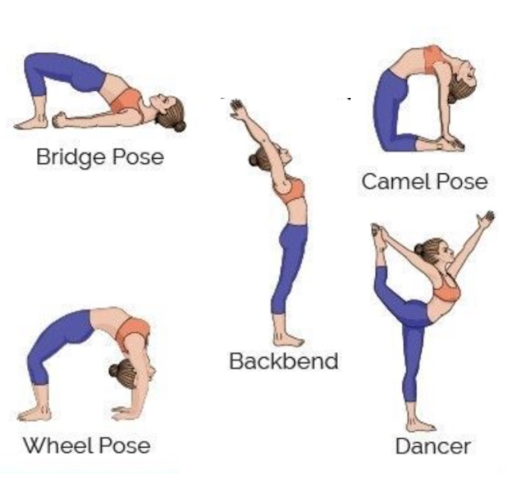
Collage created by Martha Carter using images from The Remote Yogi
In yoga, there are several positions called ‘heart opening poses’ that are meant to give the experience of expansion in different ways. I love the idea of opening the heart, but when I look at the pictures attached, my fused spine says, WHAT? NOPE! It’s obvious that the full expression of these particular poses are quite extreme, demanding a naturally flexible body and spine making them inaccessible to most of us.
But the key words here are ‘full expression’ because thankfully there ARE ways for a stiff body to experience an open heart pose in a much gentler way. Even with a permanently fused spine, it is possible to find some opening and fluidity, even if it is very subtle. Some is better than none! It can all happen with awareness, breath, inner vision, yoga props and patience. These principles apply to the Somatics exercises as well as any other movement modalites.
Start by lying down on the floor, a bed, or a massage table.
Awareness of your own posture is the starting point. Do you know your curve pattern? Your fusion pattern? A higher thoracic curve/fusion affects the upper torso/shoulder and neck, whereas a lower lumbar curve/fusion impacts the lower torso, hips and pelvis. A longer thoraco-lumbar curve/fusion, or a double curve/fusion tends to create stiffness in the whole length of the torso. Can you use your inner vision to imagine your pattern? Can you sense it? Are you aware of how much spinal flexibility you have available to you? In other words, can you arch your back? How much range of motion do you have while bending forward? Do your shoulders move easily? How does your neck feel when you turn your head? Does it feel the same on both sides? Up and down? Are you able to easefully look at the sky? Just notice.
Breathing into your ribcage in all directions—front, back and sideways—is the best way to loosen up all the muscles of the torso while also preparing the nervous system for change. Cup your hands around your side ribs and feel them expand with every inhale and contract with every exhale. As you repeat this several times, notice how each inhale opens the chest, encouraging the shoulders to open backwards. Each exhale softens the chest and the shoulders round slightly forward. As you continue breathing, close your eyes and imagine creating space into the middle of your torso—into the middle of your heart—with your breath.
Maybe this is already enough, as even small changes can feel profound. And in general, opening the heart can feel quite vulnerable. If emotions come up, just notice them and go with it. If your back starts to ache, you will know that you have successfully awakened sleepy muscles. Take a break as that is likely enough for now. However if you repeat this regularly, you will notice that it becomes easier with time.
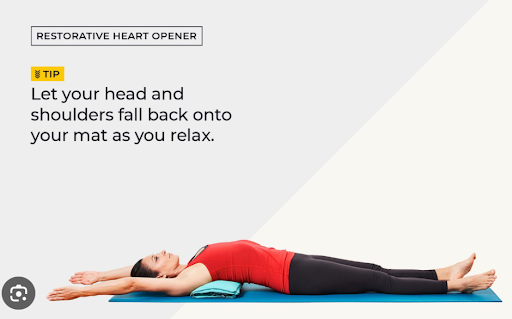
Using yoga props allows for a further and deeper opening sensation. I recommend exploring a restorative version of the ‘bridge pose’ with props such as blankets, yoga blocks, or a yoga bolster to support a gentle opening position. The easiest way to do this is by laying on your back onto a folded blanket or bolster that is arranged in a way to arch your back or open your chest or both. There is also a product called ‘back mitra’ created specifically for supporting the spine in various ways. I have never used one personally, but it makes sense that it can support chest opening.
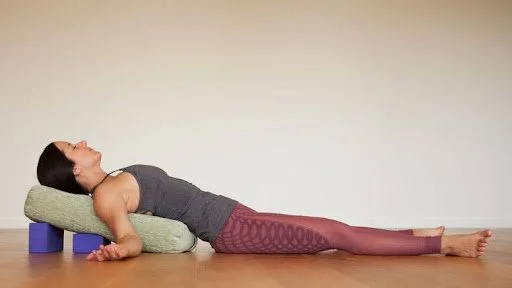
Once you find the right position for you, lie down and continue with deep breathing into your ribs, chest and heart. Use your inner vision to imagine your torso softening and opening. Start with a few minutes at a time, and work your way up to as long as 30 minutes. When you are ready to come out of the position, be sure to roll onto your side before sitting and standing.
TAKE NOTE: Each person needs to experiment to find the right amount of ‘propping’ for their own comfort. There are many examples to be found online. Starting small is essential and, over time, you may be able to increase the amount of props for a more dramatic opening. For those with a fused spine, extra caution is necessary. Intention matters more than actually moving. Awakening the muscle action is more important than moving the spine. Remember that ‘motor planning’—ie: imagining the movement happening—can be as effective as actually doing it.
BENEFITS OF AN OPEN HEART
And just to be clear, the benefits of open heart poses are many!!!
Improved posture
Improved breathing
Flexibility and range of motion
Strengthened back muscles
Awareness, focus, alignment, and posture
Expanded chest, diaphragm, and breath
Improved circulation and systems
Emotional release
Healthy spine
Improved sleep and inner peace
Increase energy
Supple front of body
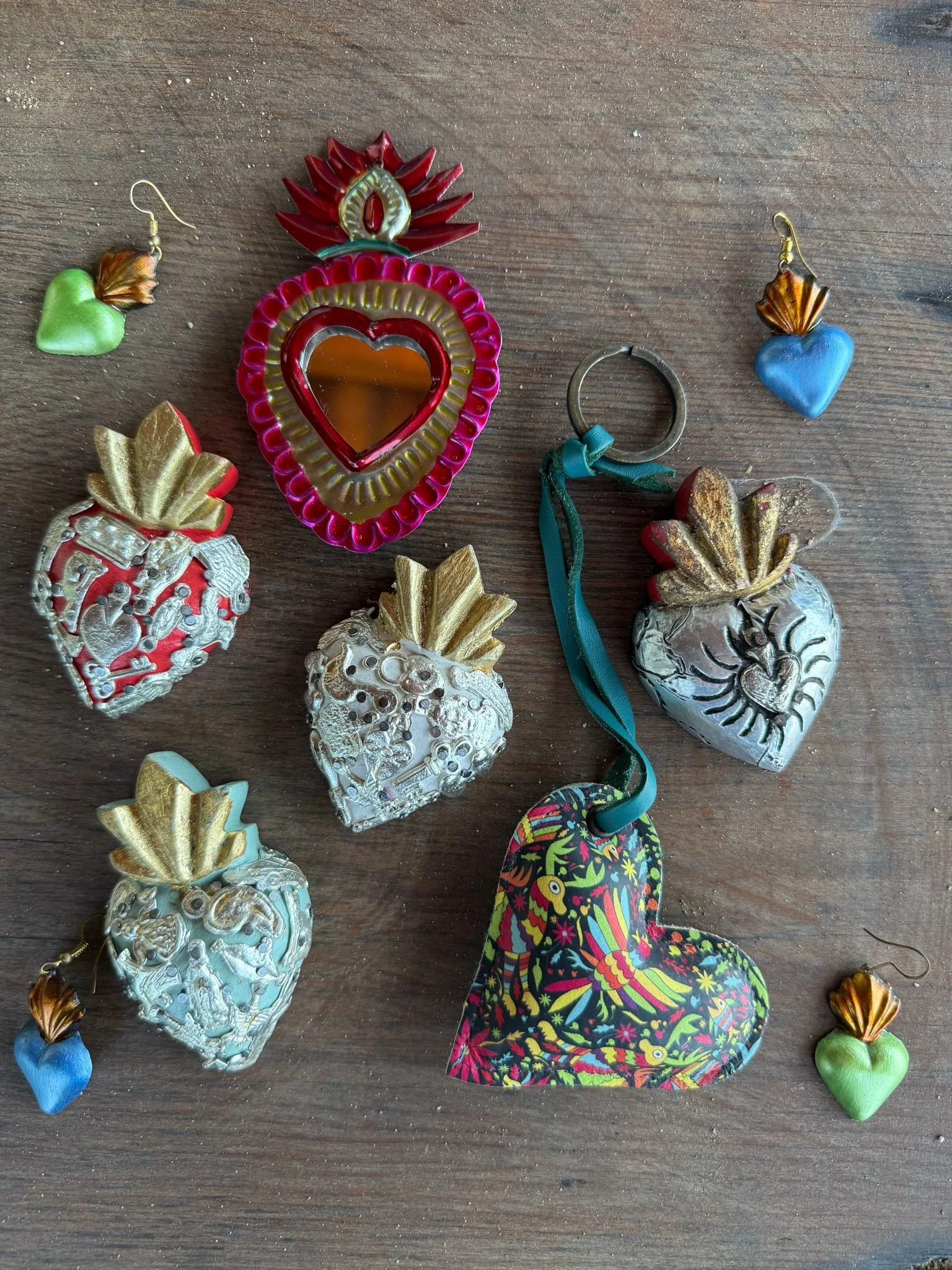
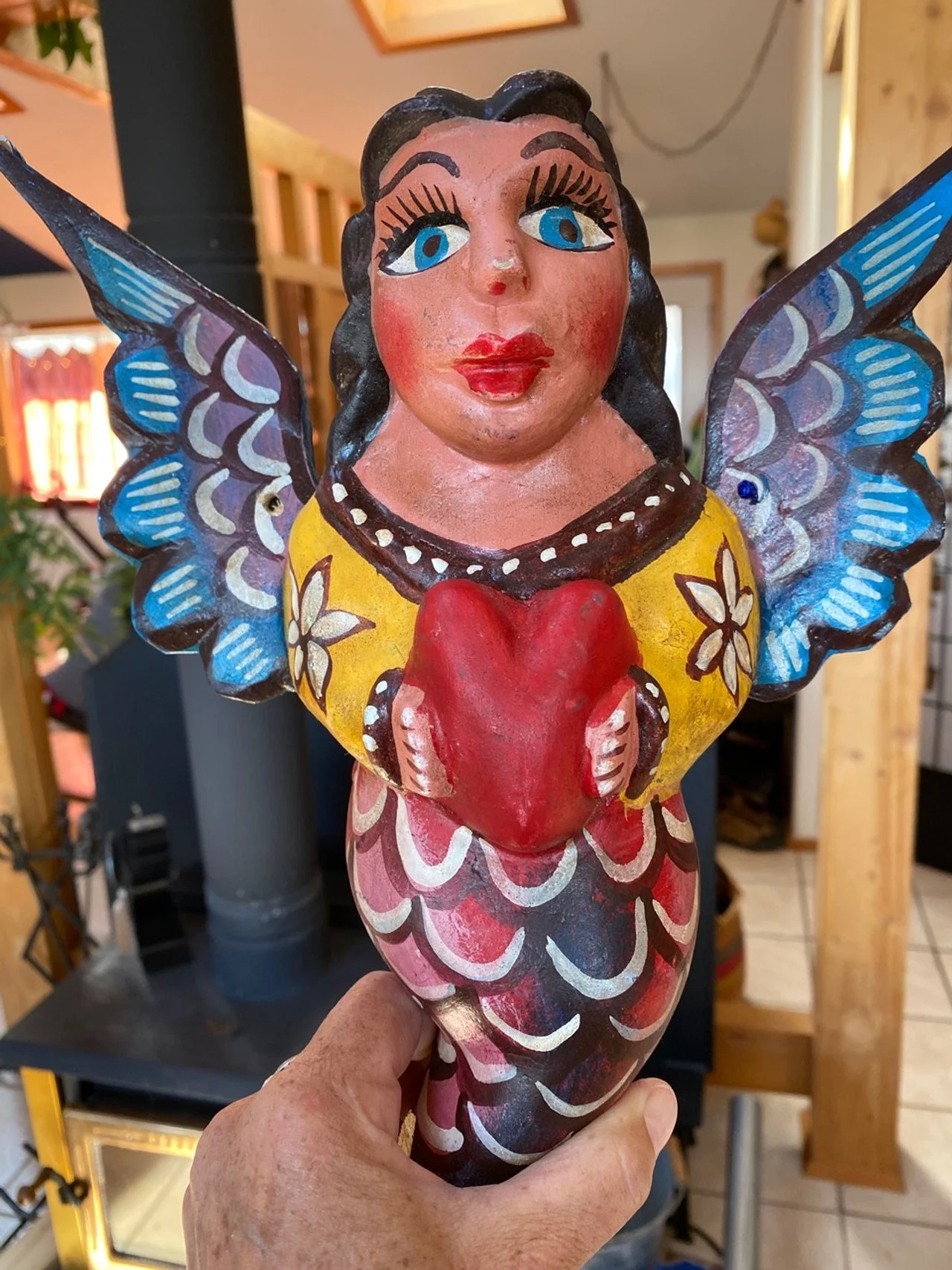
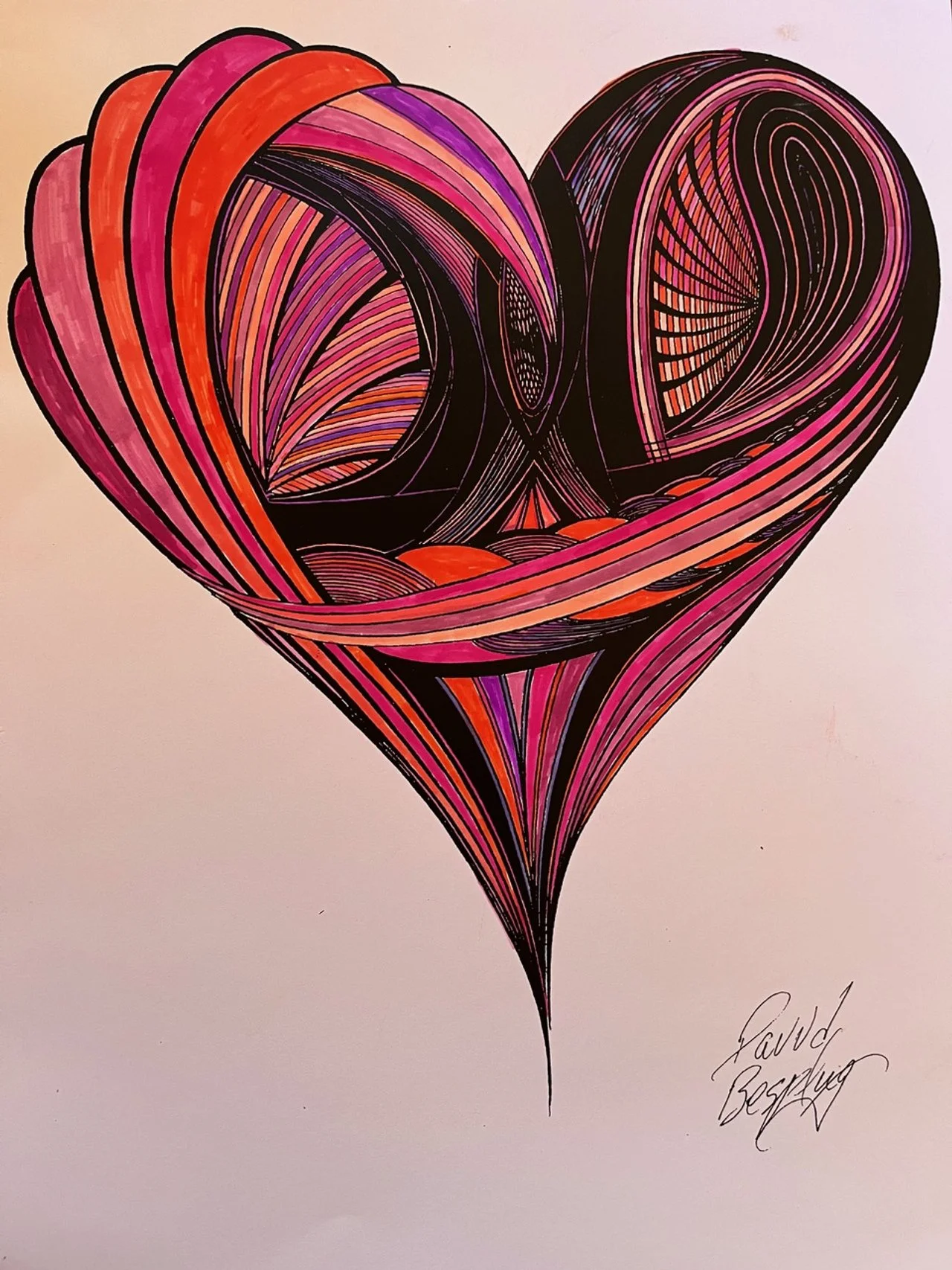
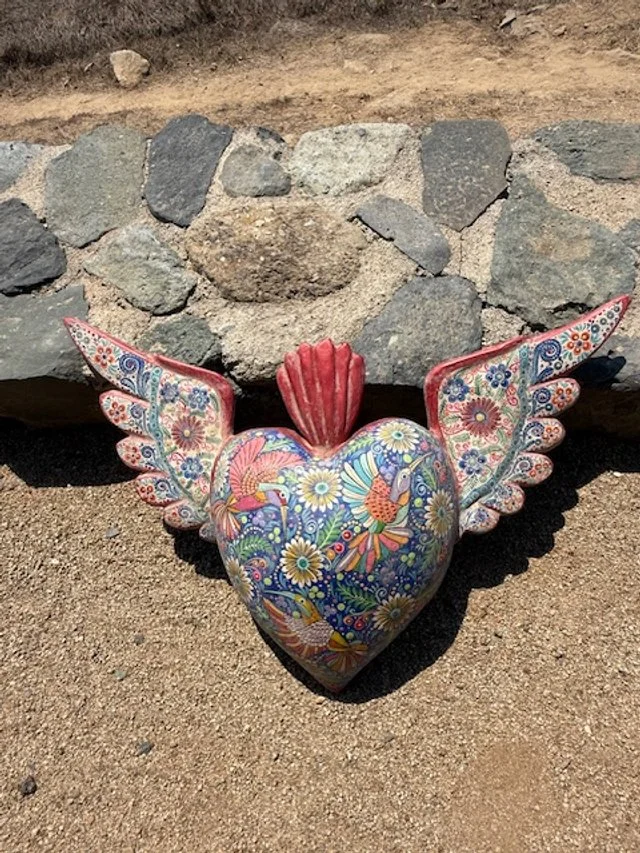
EL SAGRADO CORAZON
Of all places to be when needing to open your heart, Mexico must be one of the best places. In this ancient culture, heart images are found everywhere - not only during the month of St. Valentines (although we did find an impressive amount of heart-themed decorations for my Valentine’s birthday party in the little village store - but I digress).
Regardless of the time of year, the "Sagrado Corazón" (Sacred Heart), is commonly seen in crafts and folk art, including paintings, graffiti, sculptures, mirrors, candlesticks, clothing, hats, bags, jewellery, and much more. Often depicted with flames, thorns, wings or a cross, heart imagery is regularly incorporated into the daily lives and celebrations of all Mexicans. Perhaps that explains why they are such an open, generous, and loving culture!
SO I will leave you now to tap into the image of your own corazón. Regardless of which exercise or position you choose, enjoy getting creative with how your heart looks and feels in your mind’s eye. Play with its colour, texture, shape, and size. As you breathe into it, imagine it opening like a beacon of light, or a flame of heat, or a reflection of the ocean. Have fun with the imagery as you imagine it glowing and expanding. Let yourself drop into all the new sensations.
And the next time you decide to look up at the stars, I wish you ease as you open your heart and enjoy the night sky in all its glory!