The 6 to Her 7: How Nelly Furtado’s ‘Say it Right’ Became Part of My Scoliosis Story
Our fifteenth TOPS ‘Back Stories’ guest blog features Anna Rowe, who shares her personal journey of living with scoliosis for more than three decades. From growing up without early detection to discovering new possibilities through movement, rehabilitation, and advocacy, Anna reflects on the challenges, setbacks, and hope that have shaped her path.
Anna’s inspiring story is a reminder that every scoliosis journey is unique. Through resilience, self-discovery, and a willingness to keep learning, Anna's experience offers encouragement to anyone navigating life with scoliosis—and reminds us that every scoliosis story matters.
*****
Introduction from Martha Carter
This month, we are delighted to share an essay by, and podcast episode featuring, Anna Rowe, where she shares her inspiring success story of correcting her scoliosis with the help of the Functional Training System (FTS). Also known as Functional Patterns, this exercise method evolved from physical therapy practices in the 1970s and 80s, focusing on posture and human biomechanics such as standing, walking, running, and throwing.
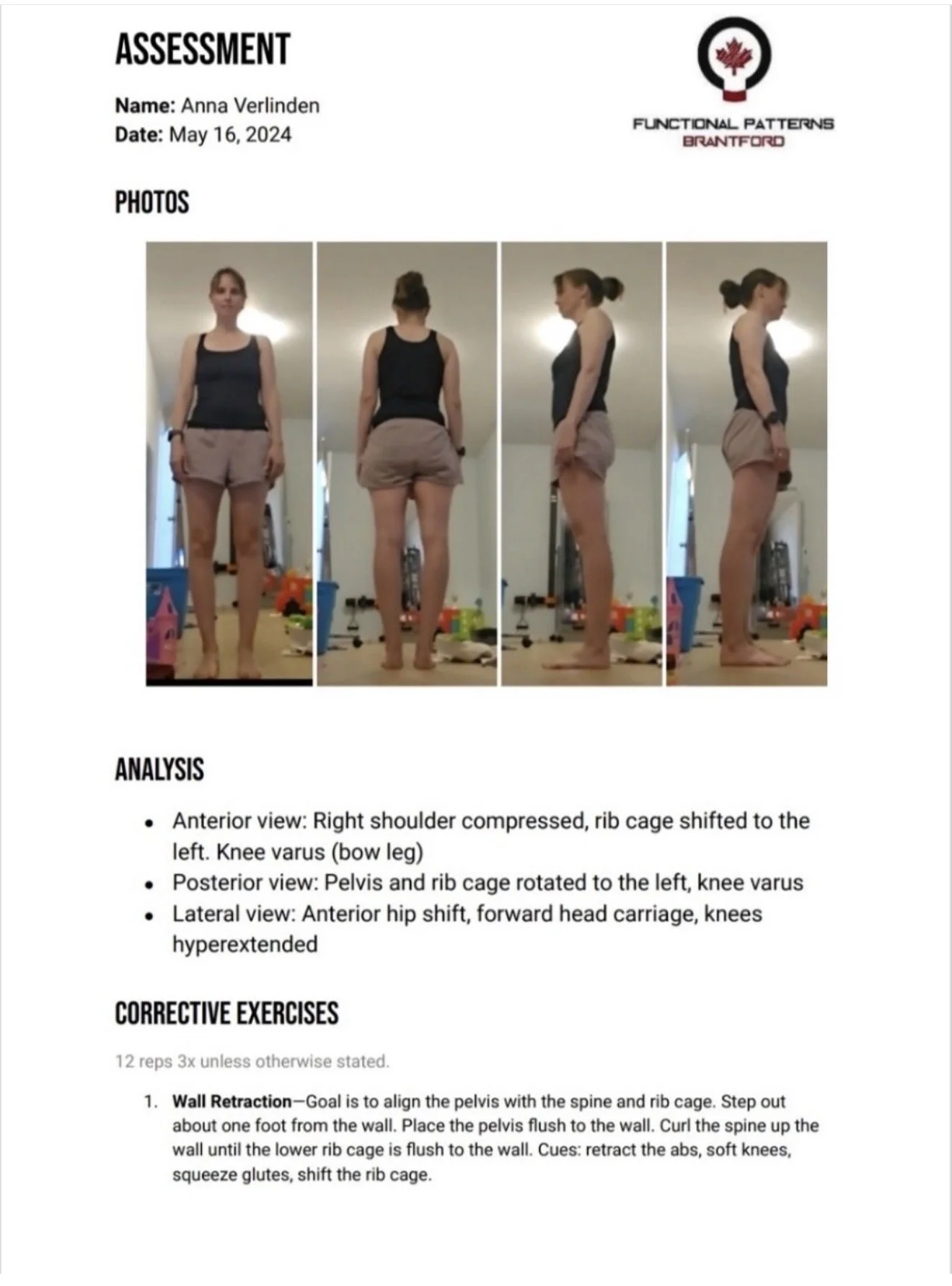
I was fascinated to hear how Anna managed to greatly reduce her curves and twists, and I’m excited to think how others might find this technique helpful. At TOPS, we often present classes in scoliosis-focused techniques such as Yoga for Scoliosis, Scoli-Pilates, Somatics for Asymmetry, and the Schroth Method which are all increasingly available online and in person globally. It’s always great to hear and learn about more options that have helped others.
The Functional Patterns system feels very accessible, offering online courses, specific equipment that you can use in your home, and even certification. Anna started with an online class, and then found a certified practitioner close to her home.
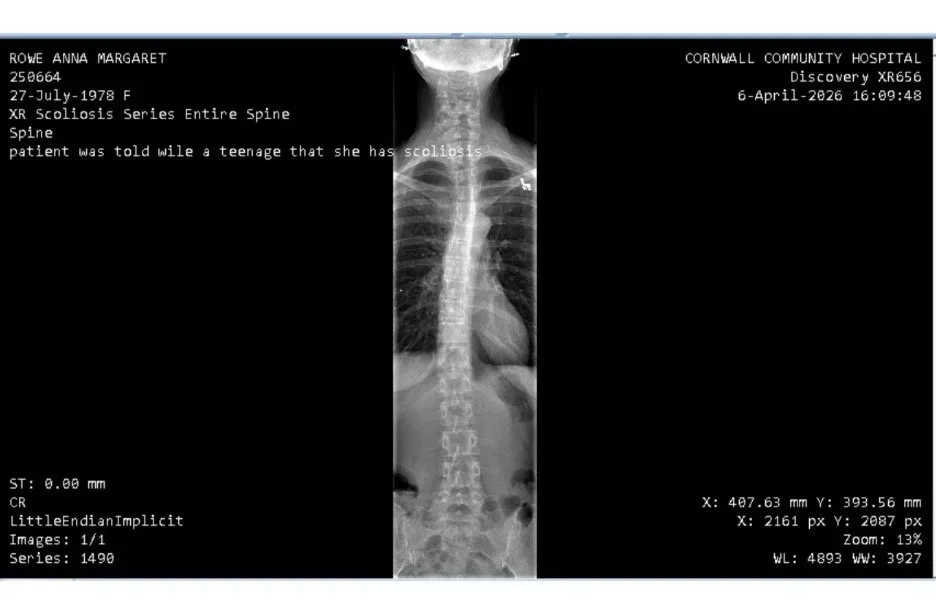
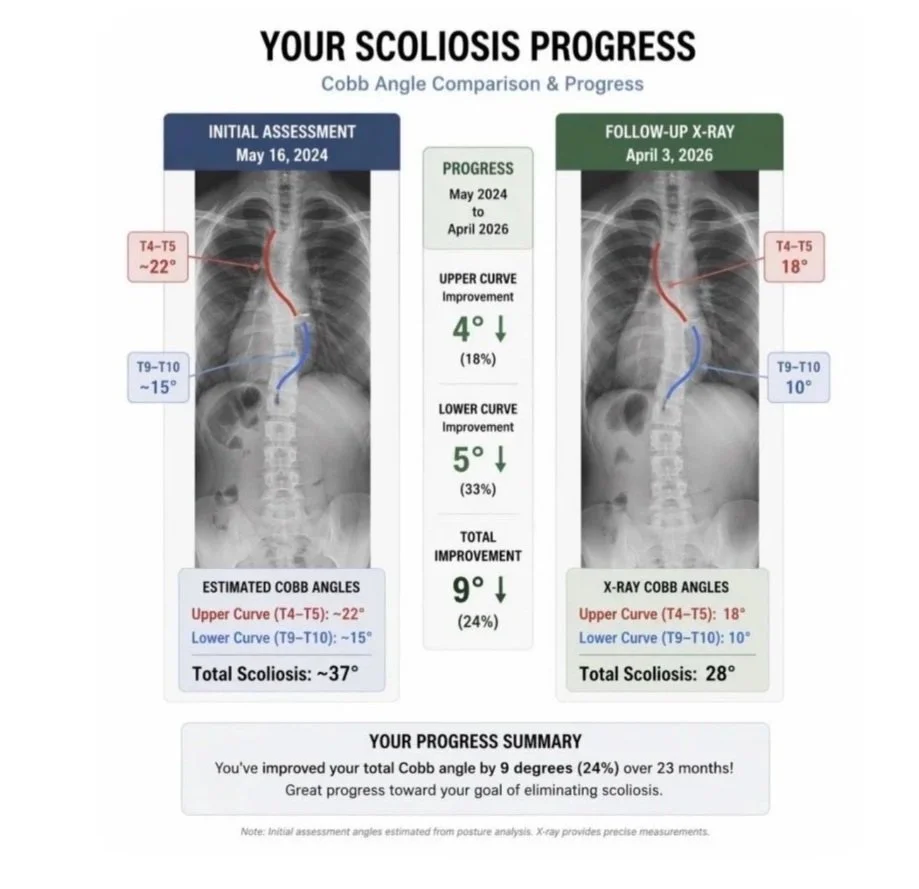
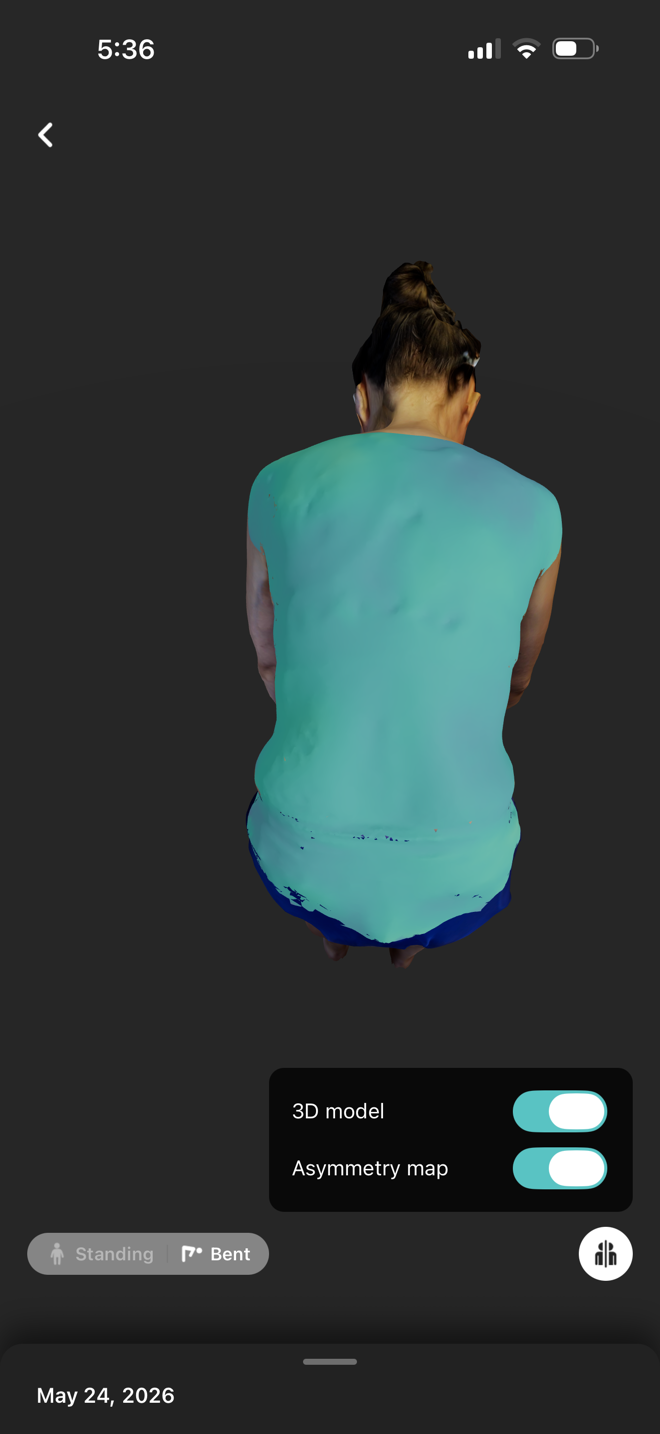
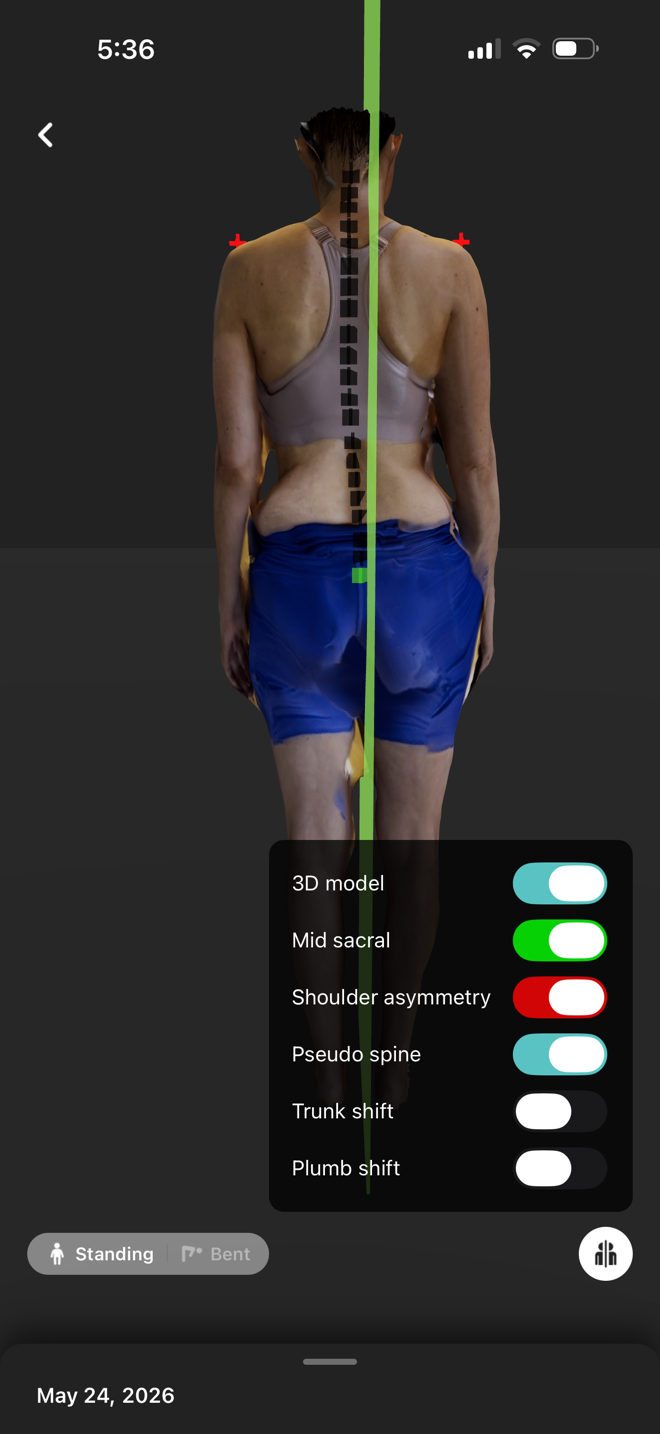
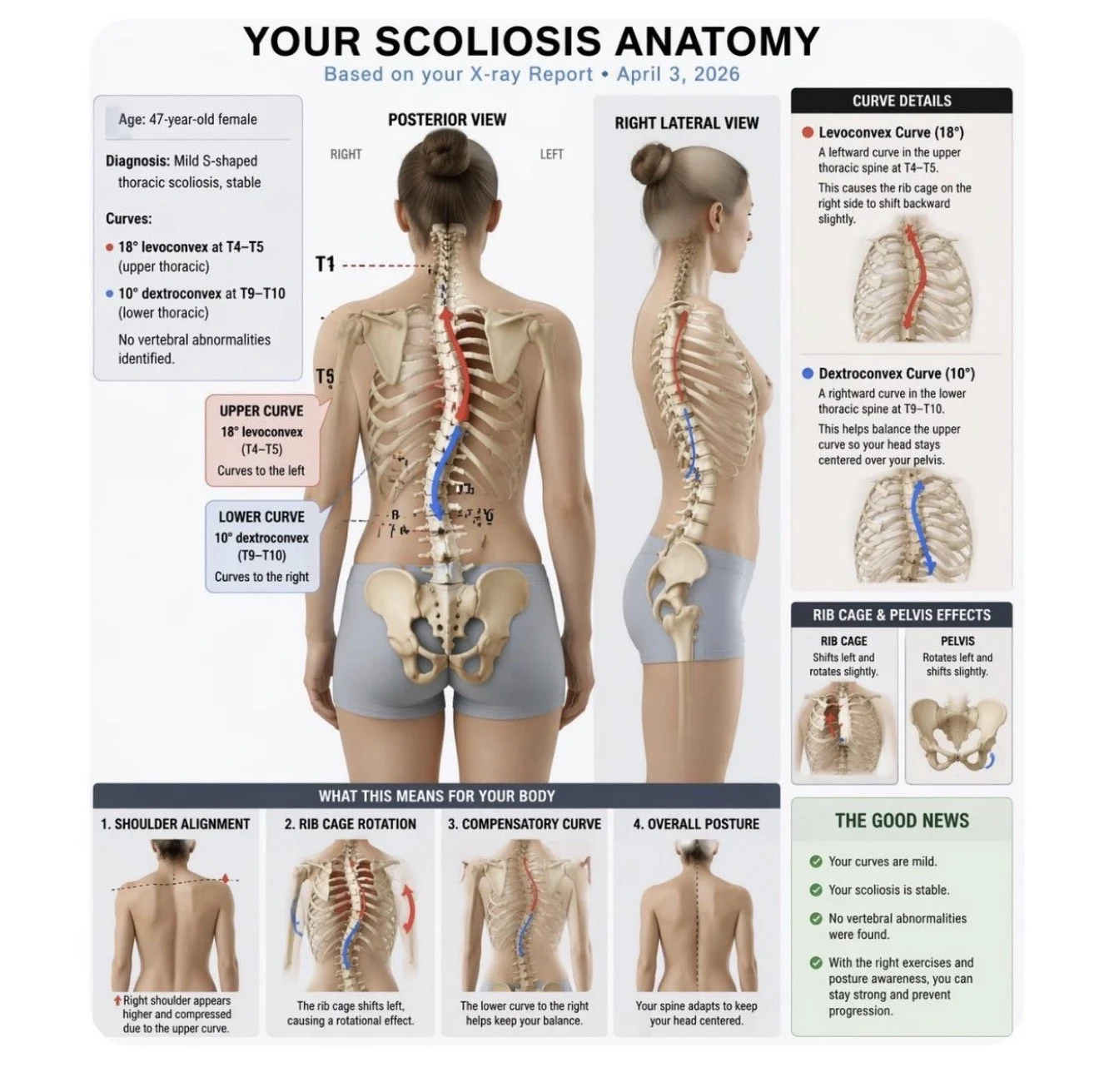
Remember, as Anna found, it is always best—and safest—to start your own scoliosis training journey by consulting a specialist in-person and, in fact, it is when she received the personal guidance that she really started to notice positive changes. Unfortunately, because Anna never had X-rays earlier in her life, she cannot definitively say to what degree she was able to find correction. Nevertheless, all you have to do is look at her images to see that her spine is now quite straight, except for a distinct curve in the upper thoracic area.
Another thing I wonder is whether Anna's scoliosis was actually a functional scoliosis (caused by muscle imbalance) rather than a structural scoliosis (caused by growth deformity). Or perhaps a combination of both? One way to tell the difference is by bending forward (like in the Adam’s test). If the scoliosis straightens itself out in the forward bend, then it is NOT a structural scoliosis which means that there is a very good chance that it can be corrected significantly. Although her upper curve is small, it is likely structural, but I think that her larger, lumbar curve was possibly a functional curve - maybe caused by her babysitting job at a young age where she shifted her body to hold a baby on her hip? Hard to know, but she recalls that as the start of her body changing, so who knows?
It is very important to note for all readers—especially those with moderate to severe curves—that extreme correction like Anna’s is much less possible with structural scoliosis. Certainly many people with mild curves are able to find some correction and stabilization with focused exercises, but the goal for most people is to find balance and ease, rather than actually straightening the spine!
I highly recommend that you listen to Anna’s podcast episode (who knew there was a Scoliosis Experience podcast?), as well as reading her words in this guest blog post, in order to get a full picture of her amazing journey.
Thanks, Anna!
The 6 to Her 7:
How Nelly Furtado’s ‘Say it Right’ Became Part of My Scoliosis Story
My scoliosis story began long before I understood what scoliosis was.
Like many Canadians of my generation, I do not remember any scoliosis screening program in my school. It was likely between 1989 and 1991, Grades 5-7 for me, that my curve could have been identified and subsequently monitored more closely. Looking back, I often wonder how different my journey might have been if early screening and greater public awareness had existed.
Instead, scoliosis became a companion that followed me through adolescence and adulthood.
For more than thirty years, I lived with the physical and emotional effects of scoliosis. I experienced chronic discomfort, postural asymmetries, and limitations that gradually became part of my normal life. My right shoulder sat noticeably lower than my left. I could not press portions of my lower back evenly against a wall. Nighttime discomfort from spinal misalignment became something I simply learned to live with.
Like many people with scoliosis, I spent years searching for answers.
What strikes me most now is that scoliosis has been recognized for thousands of years. The condition was first described by Hippocrates in ancient Greece, yet many people today still struggle to access timely information, screening, and support. While treatment options have advanced considerably, awareness remains inconsistent, and many families continue to navigate the journey feeling isolated.
My own turning point came unexpectedly.

I am an elementary school teacher, and one day while supervising students during yard duty, I became aware of movement patterns that I had never truly noticed before, after being guided by my Functional Patterns personal trainer. That moment eventually led me down a path of intensive movement retraining and rehabilitation.
Interestingly, one of the symbols that became meaningful to me during this stage of my journey was Nelly Furtado’s song Say It Right.
Back in 2006–2007, while completing my Bachelor of Education at the University of Ottawa, fellow teacher candidates taught us a choreographed dance to the song. Years later, after beginning my rehabilitation journey, I came across Nelly Furtado’s album artwork again and found myself reflecting on the idea of alignment, movement, and finding the right path.
The title “Say It Right” took on a new meaning for me. For decades I had lived in a body that felt “twisted.” Now I was learning to move differently, becoming more aware of posture, balance, gait, breathing, and how my entire body functioned together.
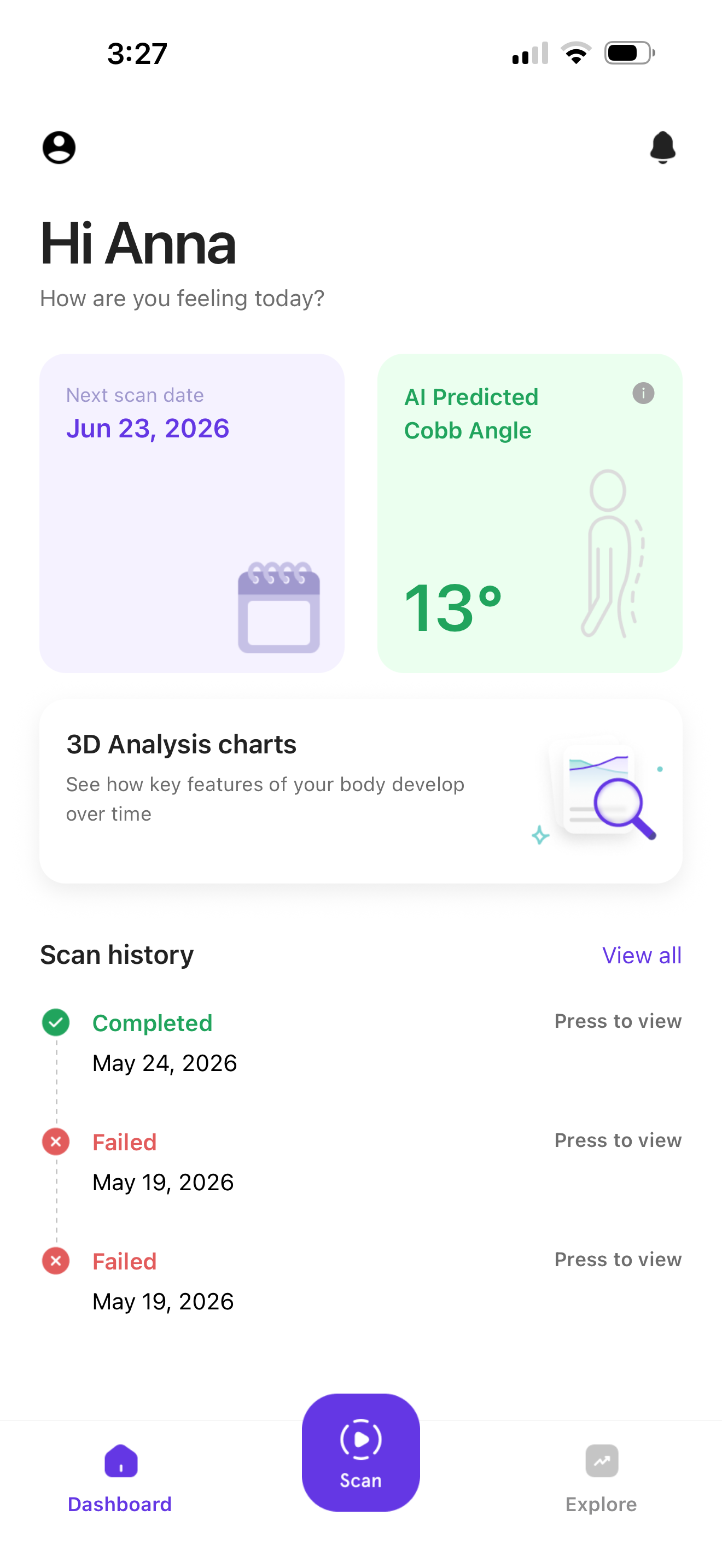
Over time, I experienced significant improvements. My shoulders became more level. Areas of my back that had never seemed symmetrical became more balanced. My pain levels decreased dramatically. Follow-up imaging showed that my Cobb angle had been reduced, although I still may have mild scoliosis.
My story is not one of a miracle cure.
I still live with the effects of having spent decades adapting to a curved spine. One challenge I did not anticipate was altered proprioception—the body’s awareness of its position in space. As my posture and movement patterns changed, I found myself needing to relearn how my body moved. This adjustment period contributed to difficulties with balance and coordination and, ultimately, a workplace concussion that required me to take time away from teaching.
That experience taught me another important lesson: improving scoliosis is not always the end of the story. Sometimes it is the beginning of a new chapter.
Today, my focus has shifted toward advocacy and awareness.
Recently, I shared my experience with scoliosis organizations and advocacy groups across Canada and the United States. During these conversations, I learned that many organizations focus specifically on evidence-based interventions and some on early detection in children. I understand and respect that mission. At the same time, I believe there is also value in continuing to listen to patient stories.
Anecdotal experiences do not replace scientific evidence, but they can inspire questions, generate research ideas, and offer hope to people who may feel alone.
My journey has convinced me that every scoliosis story matters.
Whether someone chooses observation, physiotherapy, bracing, surgery, movement-based rehabilitation, or a combination of approaches, each person’s experience contributes to the collective understanding of life with scoliosis.
As I prepare to teach Grade 6 next year, I often think about the students sitting in classrooms today. Some of them may have scoliosis and do not know it yet. Some may be struggling with body image, pain, or uncertainty about their future.
If my story can offer them anything, I hope it is this:
A scoliosis diagnosis does not define your future.
Your journey may not be straightforward. Progress may be slow. Setbacks may happen. But improvement is possible, adaptation is possible, and finding support is possible.
After more than thirty years of living with scoliosis, I am still learning, still healing, and still discovering what my body is capable of. My scoliosis continues to improve, and I hope to get rid of it holistically all together, if I haven’t already.
And perhaps that is the most important lesson my scoliosis journey has taught me: our stories are never truly finished. They continue to evolve, one chapter at a time.
***
Listen to Anna tell her story, Connecting the Brain and Scoliosis Body: Anna’s Journey to Living Better with Scoliosis, on The Scoliosis Experience podcast.
Questions or comments? Reach out.