BreathExperience – Another ‘Toolbox’ Addition
This is Part 54 of a serial blog originally titled 'Martha Carter's Healing Journey'. Curious about the earlier posts? To start from the beginning, read Part 1.
***
In my ongoing curiosity to try new things to improve my health and wellness, I recently took a two-day workshop called BreathExperience, based on the Perceptible Breath method (also known as the Middendorf Breath Experience) developed by German breathing educator Ilse Middendorf (1910–2009). I thought I knew a lot about breathwork, but as it often happens when we start down one path of learning, we quickly discover there is more to learn—more paths to explore. In the case of this workshop, I was surprised by its uniquely simple approach to teaching breathwork, and how that simplicity opened up a new and unexpectedly challenging learning experience.
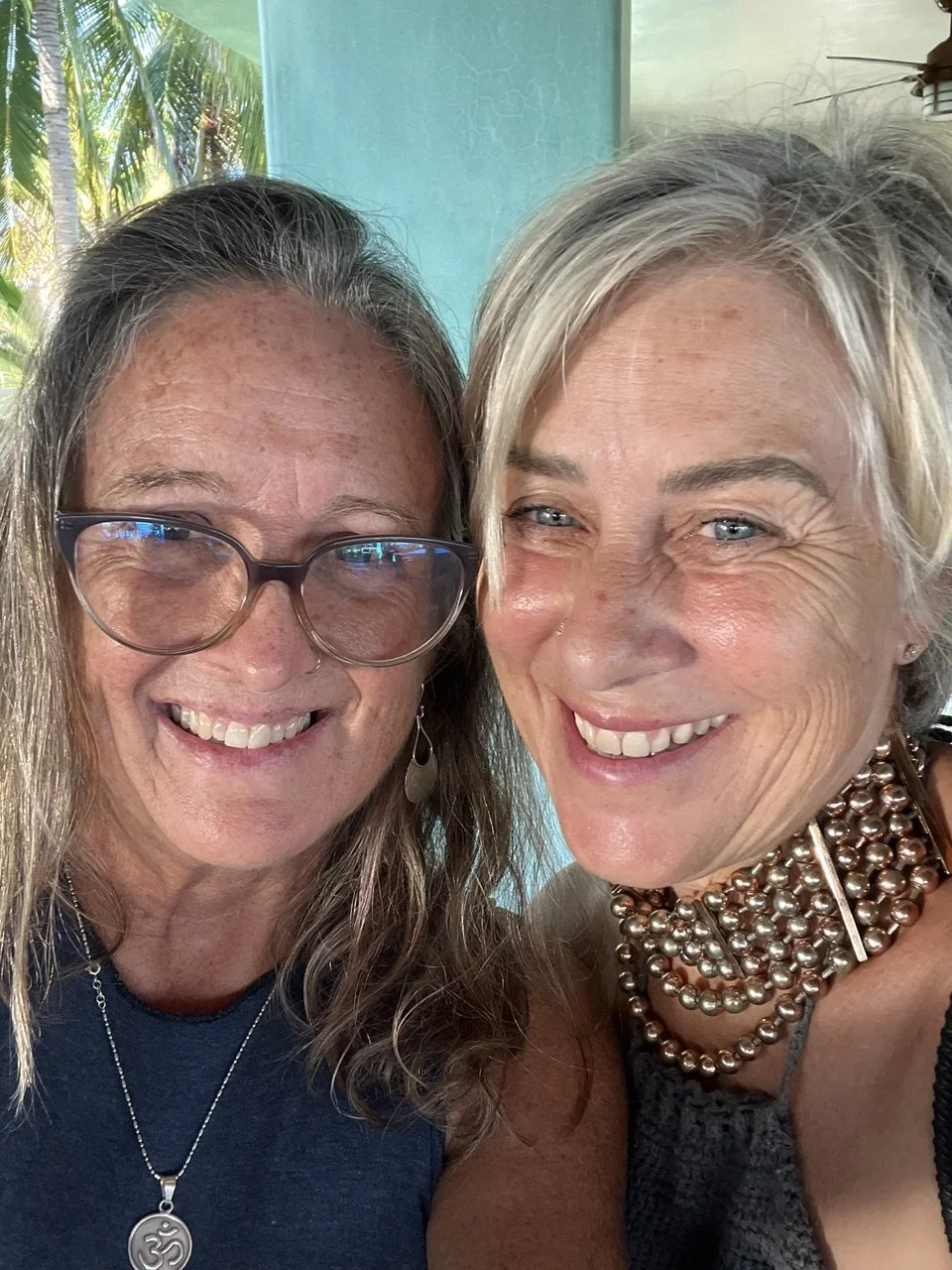
Martha with her good friend, Marcie
My good friend Marcie and I had been talking about doing a breathwork workshop for a while, but trying to decide on the right one felt overwhelming. Breath training has become a very trendy activity, and our simple Google search offered so many options that it made us laugh out loud. How to choose? Gratefully, the universe provided when we heard about this workshop, which was being taught by a dear acquaintance of Marcie's. The timing and location were perfect, so we decided to check it out without knowing much about it.
I have explored various breathing techniques over the years, starting with the ancient yogic practice of Pranayama, which was part of my yoga teacher training. Derived from the Sanskrit words prana (vital life force or breath) and ayama (control or extension), it uses specific techniques—such as deep breathing, pacing, and breath retention—to calm the nervous system, increase energy, and prepare the mind for meditation.
I appreciated experiencing Pranayama throughout my teacher training, but I found it difficult to understand and also hard on my body, which made me wonder what the point was. It is definitely powerful, but the expectation that everyone would practise while sitting cross-legged with an upright spine was extremely difficult for me—in fact, it was total torture. I didn't yet understand that it would have been perfectly acceptable to practise in a chair or lying down, which is how I do my breathing now. At the time, because of my uncertainty and discomfort, I abandoned that particular practice almost as soon as I learned it.
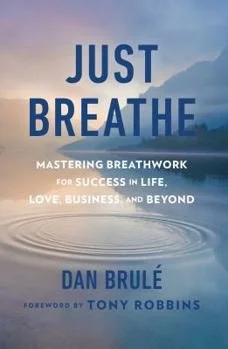
More recently, I was excited to discover the teachings of breath master and author Dan Brulé, who wrote the book Just Breathe. In it, he draws on many breathing traditions to release stress and trauma while boosting physical energy. Yes, these are the same goals as Pranayama, but he does not teach within the context of yoga. Instead, he is more playful and open, encouraging people to stand, move, make noises, and gesture while breathing. He uses plain language to demystify complex breathing patterns, making the exercises feel accessible to all through his friendly, enthusiastic demonstrations. He also has a website with free online programs and offers in-person classes and workshops around the world. I have embraced several of his techniques to help keep myself centred and calm, incorporating them into my own movement practice as well as sharing them with my students. Soon, I expect to return to his videos for a refresher because he offers so much to explore.
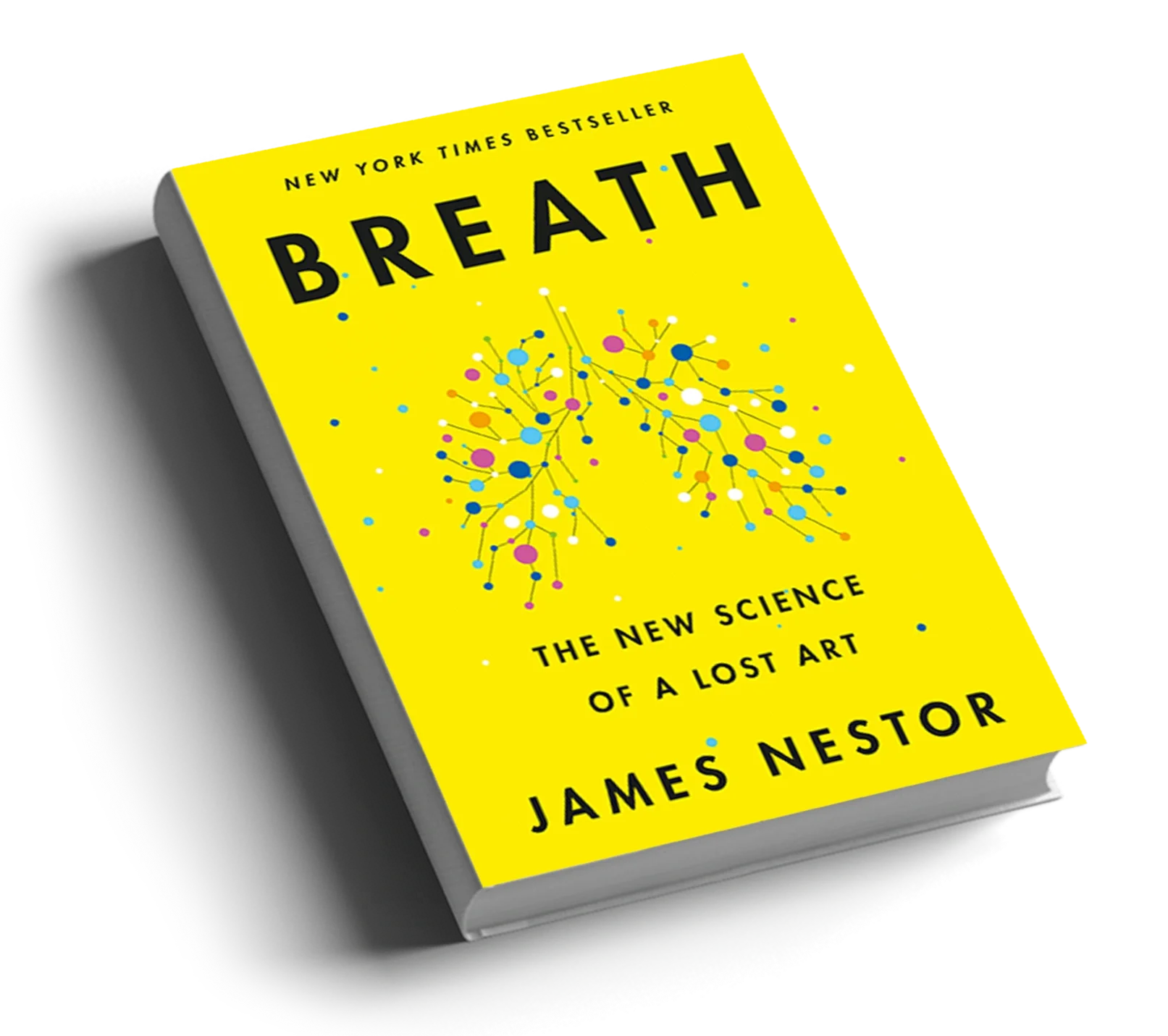
Another book that made a strong impression on me is Breath: The New Science of a Lost Art. In it, science journalist James Nestor goes on a journey to solve his own breathing issues. Through extensive experimentation, he arrives at many of the same conclusions as other breath teachers—that by learning how to breathe properly, we can improve our well-being, balance our emotions, and find more energy to live the lives we want. He offers many suggestions for training the breath, one of which is the rather dramatic practice of taping the mouth closed while sleeping. I tried it, and it seems to have helped my snoring, but I have to admit that it feels unnaturally stressful, which is the opposite of what I associate with breathing for calming the nervous system!
Nevertheless, his writing is engaging as he reveals fascinating anthropological insights into the evolution of breathing throughout history. For example, how different cultures have evolved to breathe in different ways, affecting the shape of the jaw, the teeth, and many other surprising aspects of our anatomy. It's definitely worth a read—especially if you suffer from snoring, sleep apnea, chronic sinus infections, or other breathing issues.
Another very specific breathing lesson came when I was desperate to find a natural way to lower my blood pressure. After spending some time on Google, I gratefully found The Blood Pressure Program by health practitioner Christian Goodman, whose mission is to find natural solutions for common health problems. I started following the program, and my monitor showed that my blood pressure dropped noticeably after each practice. I kept repeating it regularly, and two years later I am still incorporating it as part of my daily meditation.
But even with all these previous studies and experiences, the BreathExperience workshop felt completely new—and, as I said before, surprisingly challenging.
The workshop began with the twelve participants sitting in a circle on wooden stools. I immediately switched my stool for a chair with back support, which gratefully caused no concern.
It turned out that four of the participants were actually the teachers, who would alternate sessions throughout the weekend. They were all very friendly and welcoming.
After quick introductions, the first teacher invited us, without any further explanation, to place one hand on the front of our rib cage and simply breathe into it. We were asked to notice our breath—to observe our natural rhythm without forcing either the inhale or the exhale. Just allow it.
As is typical for me and my busy mind, I immediately started wondering what we were doing and where it was going. My monkey brain was asking all the questions. Should I breathe through my nose or my mouth? Should I expand my ribs or breathe into my belly? Should the exhale be longer than the inhale? Should I slow it down or speed it up? And on and on.
I felt impatient that the teacher wasn't giving clearer instructions. I wanted to understand better before doing it, but within a few minutes she stopped us and invited everyone to talk about their experience, which increased my impatience.
What are you feeling? What are you sensing?
"Seriously?" I thought.
We just got started. How do I know what I'm feeling when I've barely had time to try it?
After a few minutes of discussion, the teacher has us resume the breathing. This time she asked us to continue while adding a hand behind our back, rubbing our legs, slapping our arms, then standing, walking, stopping, starting, and changing directions.
What was I sensing? Impatience!
How am I supposed to honour the rhythm of my breath when I have to keep changing position? How can I notice what I feel while also doing all these movements? Is this just the warm-up? When does the real ‘technique’ begin?
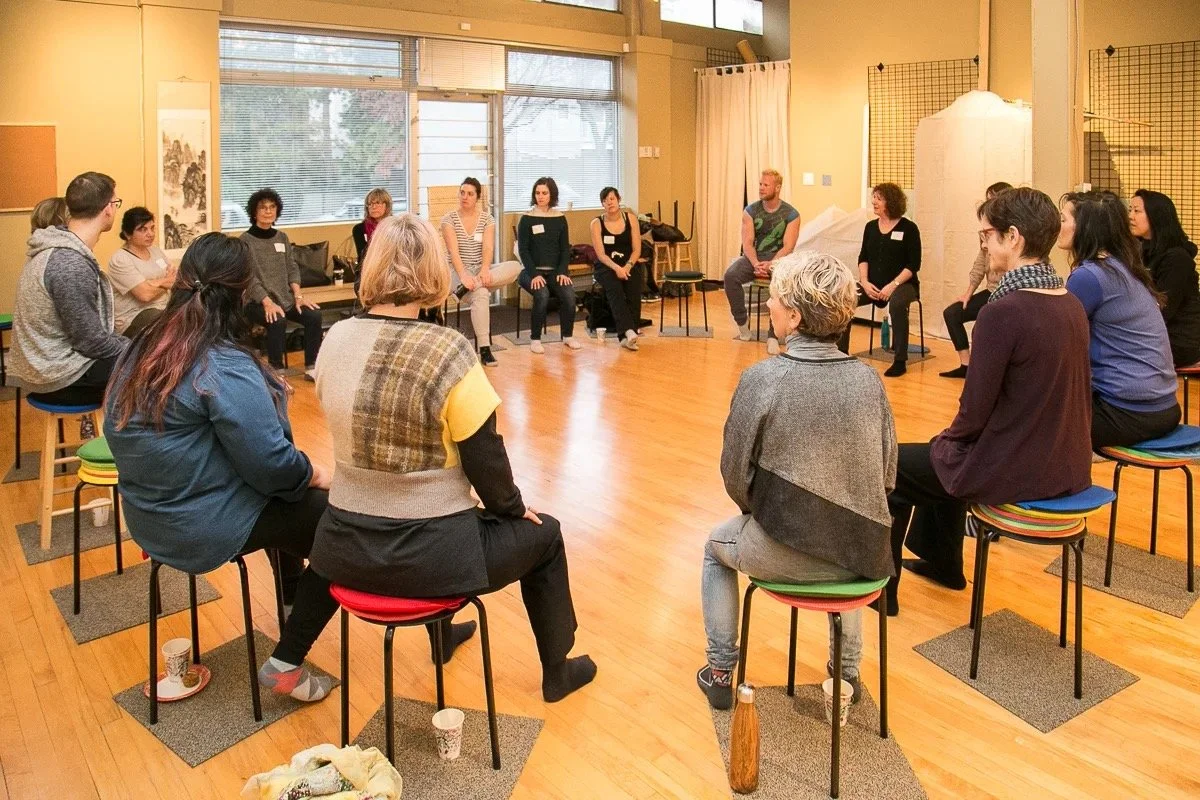
Studio space of the BreathExperience workshop
We sat back down, and sure enough, the teacher asked again if anyone wanted to share their experience. Others volunteered all kinds of reactions, but wasn’t sure what to say. What experience? I wasn't really settling because it felt like we hadn't actually done anything yet. Plus, the teacher kept making us talk!
At lunchtime, Marcie and I laughed about how as she felt similarly. We agreed that the workshop felt unclear and that neither of us really understood what we were doing. It felt more like meditation than breathwork, yet the constant interruptions made it impossible to settle into meditation. We even considered playing hooky for the afternoon, but we decided to return to finish the day.
That evening, we both noticed that we felt surprisingly good after the day of deep concentration, even with very little physical activity. It made us realize that we could probably benefit from more of whatever this is in our lives. But we still wondered: What exactly is BreathExperience? What differentiates it from meditation, mindfulness, or movement improvisation with breath?
The next morning was stormy and rainy, and without clearer answers about the workshop's goals, we briefly entertained the idea of staying home for a lazy day. Thankfully, we went back—and that was when the magic started to happen.
It's hard to explain exactly what changed, but something clicked for both of us. Maybe it was the hours of "meditation" the day before. Maybe something had integrated on a cellular level. Because of the repetitive approach and vocabulary used by each teacher, I started to understand that continually returning to the sensation of our own natural breath in each moment is the goal.
The short periods of practice interwoven with the "annoying" talking sessions are the technique. The challenge of honouring one’s own natural rhythm while interacting with others and confronting different emotions is part of what differentiates the BreathExperience from meditation alone.
I finally understood that the teachers had been gently guiding us toward now—right now. Not in isolation, but in the context of community and communication. Learning to stay centred in ourselves while remaining connected with others.
The repeated use of words like allow, invite, offer, notice, sense, and trust laid the groundwork for curiosity. I understood that the regular opportunities to express feelings and sensations were not really about the breathing itself, but about releasing unhelpful thoughts, worries, and relentless questions—like mine—to make way for the simplicity of being.
SIMPLICITY.
An opportunity to simply be yourself exactly as you are. No need to be different. No need to change, fix, or pretend.
This is where the magic lies.
But it turns out that staying simple is not so simple.
It was already slightly challenging to trust the teachers and the unknown process, but the real challenge was letting go of my own questions, thoughts, worries, fears, and judgments. I realized I didn't need to understand everything. There wasn't anything extra to analyze. I simply had to let go of the thinking and move into the sensing.
Oh! Now I get it!
Many movement systems—including yoga, physiotherapy, fitness, and Somatics—offer wonderful techniques to improve function, restore movement, or reduce pain. I have benefited enormously from all of them. Yet I realize that I often approach these practices with an underlying belief that I need to become ‘better’ somehow—as though there is something about me that needs fixing.
BreathExperience felt different. There was nothing to accomplish. Nothing to correct. Nothing to strive toward. The invitation was simply to become deeply present with the breath that was already there. It occurred to me that almost all of these principles are embedded in the teachings of Hanna Somatics and therefore, I did understand when I finally let myself.

As someone living with scoliosis and a long spinal fusion, I have spent a lot of time trying to maintain ease in my body. I am constantly working to improve my mobility, fascia, strength, balance, alignment, posture, pain management, breathing, and nervous system regulation. Each of these tools has tremendous value. But what BreathExperience unexpectedly offered me was permission to stop trying to improve myself for a while. For two days, my breath wasn't something to optimize. It was simply something to notice. That alone was surprisingly healing.
BreathExperience has added something new to my toolbox that I didn't realize was missing. Not another technique. Not another exercise. Simply a reminder that my own breath, just as it is in this moment, is already enough to come home to.
Perhaps that's the most valuable tool of all.
***
Interested in receiving our monthly newsletter? Subscribe here.
Got comments? Please feel free to write us anytime.